Layering for Warmth (and Quiet)
Start from the ground. A rug is not just a picture frame for furniture — it’s an acoustic blanket that absorbs echo and sets the visual rhythm. If a living room feels “hard,” it’s usually because everything is flat: smooth floors, glossy tables, bare windows. Adding a rug introduces a soft pause underfoot and creates a zone where conversation naturally slows.
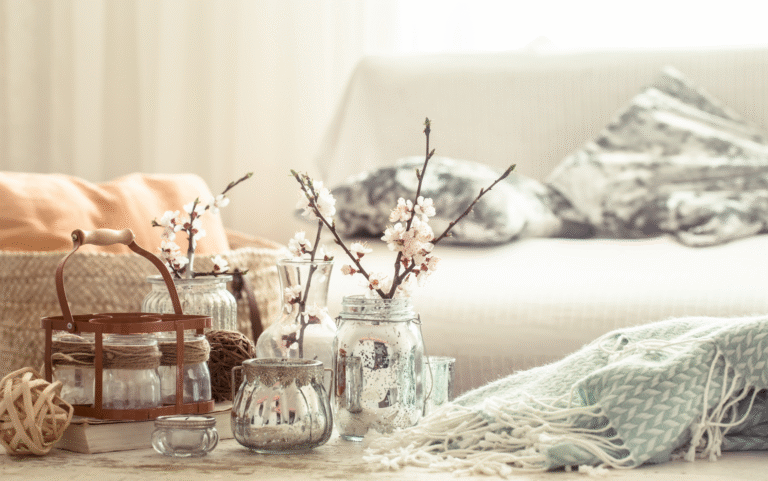
Next, build vertical comfort: throws, pillow covers, and curtains. Two pillow sizes are enough to feel layered without fuss (try 50×50 cm plus a 40×60 cm lumbar). A throw draped at an angle softens corners and connects colors across the room. Curtains that skim the floor make spaces look taller and quieter — even sheer fabric knocks down harsh light and midday glare.
Finish with micro-textures: a canvas wall print, a matte tray, a ceramic vase with a visible grain. These small, tactile notes keep a neutral palette from feeling flat. If you prefer color, add it through fabric rather than paint — textiles are easier to swap and age more gracefully.
Mixing Textures, Not Noise
Texture mixing works like music: you want contrast and repetition. Too many loud textures compete; too few feel dull. Aim for one statement texture, one supporting texture, and one smooth anchor.
- Pair crisp with cozy: cotton or linen covers balance a chunky knit throw.
- Balance shine: put a matte tray on a glossy side table, then add a soft ceramic for depth.
- Repeat to unify: echo the same weave or tone at least twice in the room.
If you’re unsure, limit patterns to one hero piece (a cushion or rug) and let solids do the rest. Texture reads calmer than print at a distance, so you can have interest without visual noise.
Scale & Proportion
Textures have scale. A jumbo cable knit can overwhelm a studio, while a thin flat-weave rug can feel lost in a large lounge. Choose smaller weaves and tighter hems for compact rooms; choose chunkier knits and heavier drape for open spaces that need grounding.
For pillows, insert quality matters as much as fabric. A feather-down blend creates the coveted “chop” and molds to the back; a plush microfiber insert keeps vegan-friendly structure. Soft enough to hug, firm enough to hold shape — that’s the sweet spot.
Fiber Guide: Feel, Function, and Where They Shine
Cotton: breathable, easy-care, and budget-friendly. Great for pillow covers and everyday throws. Wash cold; low heat dry to avoid shrinkage.
Linen: airy, relaxed wrinkles, and beautiful in sunlight. Perfect for curtains and summer bedding. Expect texture to soften over time.
Velvet: depth and drama with a subtle sheen. Lovely on cushions or a small ottoman. Avoid heavy pressure to prevent crush marks; steam lightly to revive.
Wool blends: warm, durable, and naturally soil-resistant. Ideal for rugs and winter throws. If the recipient runs warm, choose lighter weights.
Poly blends: resilient and colorfast — smart for homes with kids or pets. Look for a soft hand and avoid overly shiny finishes.
Cheatsheets
Care Basics (That Actually Extend Cozy)
Think maintenance in tiny routines. Shake throws outdoors once a week; dust is what makes fabric look tired. Rotate pillows quarterly so the sunlight fades evenly. For rugs, a slow vacuum with the beater bar off preserves fibers and still removes grit.
Spot treat first; full washes are the last resort. A dab of mild detergent and lukewarm water solves most marks. Always test on an inner seam. And remember: heat sets stains and shrinks fibers — cool water buys you time to think.
Common Mistakes (and Simple Fixes)
All smooth surfaces: leather + glass + painted walls equals echo. Add one nubby element per zone — a knit, a boucle cushion, or a textured canvas.
Pattern overload: five prints, no rest. Keep one hero pattern and let texture carry the interest elsewhere.
Rug too small: legs floating off the island. Choose sizes that allow front sofa legs on the rug; in dining areas, add 60 cm to the table on all sides.
Harsh light: bare windows wash colors out. Sheer curtains filter light and soften edges without darkening the room.
Do-Today Steps
Choose one spot you use daily — the sofa corner, the desk, the reading chair. Add a tactile layer (throw or cushion), introduce a matte object next to a shiny surface, and put a small basket within reach for tidy comfort. Notice how quickly the room feels slower and kinder.