Claim the Corner
Most cozy corners start with permission: permission to choose one small area and give it a job. When a space has a purpose, decisions get easier and visual noise softens. Ask one question: What tiny ritual do I want this corner to support every single day? Reading three pages, journaling before bed, afternoon tea, a call to a friend — any ritual works, as long as it’s honest.
Once you name the ritual, sketch a micro–floor plan. It can be as simple as a chair icon, a small side table circle, and the path your feet take to enter and exit the nook. If your home is compact, measure the available rectangle (width × depth) and note outlets, vents, and windows. Corners thrive on boundaries: a rug edge, a curtain fold, the back of a bookcase, even the side of a wardrobe can gently frame the nook without boxing it in.
Next, choose seating. For short rituals, a firm armless chair keeps posture engaged; for longer reading, a compact lounge chair or cushioned bench is kinder to shoulders and neck. Look for open legs and lifted silhouettes so the eye can see air underneath — a classic small-space trick that instantly makes rooms feel lighter. If your nook borrows space from a hallway, consider a wall-mounted fold-down seat or a storage bench with a cushion to double as shoe storage.
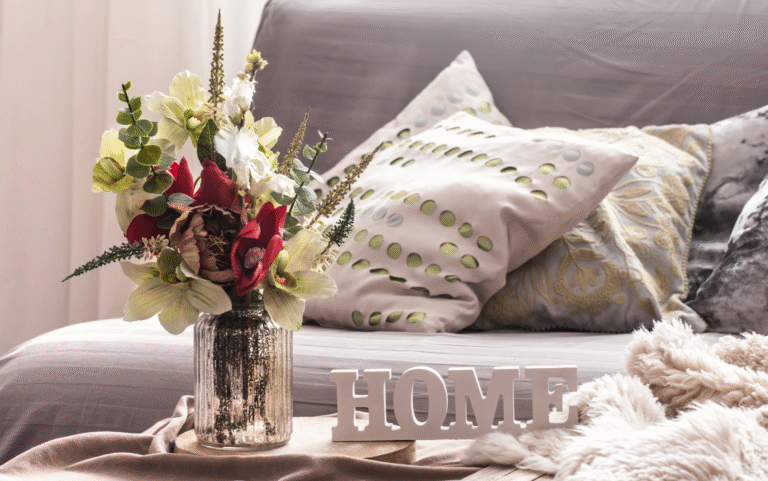
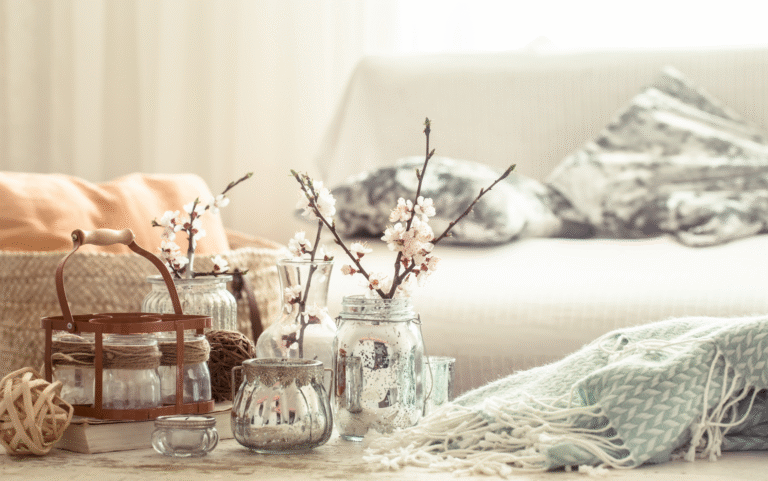
Styling is simplest when you limit objects to a three-piece vignette: a soft thing (throw or cushion), a functional thing (lamp or tray), and a personal thing (book stack, framed photo, travel postcard). Rotate the personal piece with seasons to keep the corner feeling alive without buying new items. Don’t underestimate scent — a subtle candle or diffuser creates a boundary your eyes can’t see, but your body will notice.
If your floor plan argues with you, try the one-minute move: slide the chair 8–12 cm away from the wall. That thin line of visible baseboard makes the corner read as intentional architecture rather than leftover space. Finish with a small tray to collect the everyday mess (mug, pen, lip balm). When clutter has a landing zone, it stops shouting.
Think Vertical
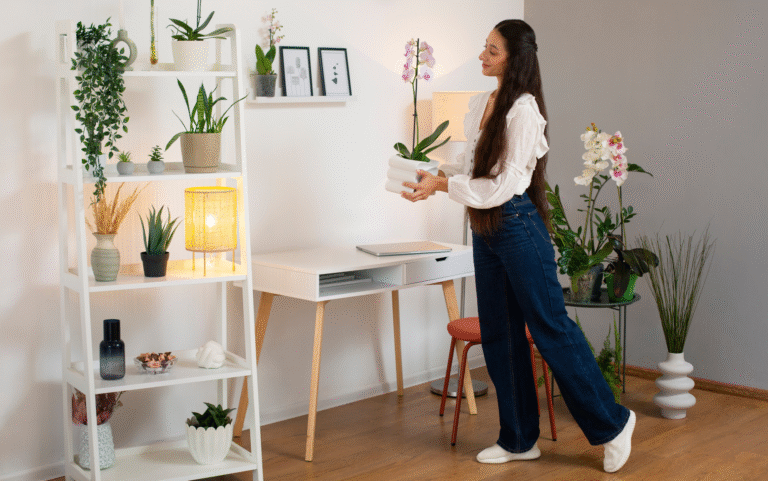
In small spaces, the wall is your largest piece of furniture. Go vertical with a calm, narrow rhythm. Three aligned frames read as one column; two slim shelves feel quieter than a single deep one. Keep objects within a 30–35 cm visual depth so the corner doesn’t tip forward into the room.
- Slim shelves hold 5–7 books max, a small plant, and a candle. Leave negative space; let the wall breathe.
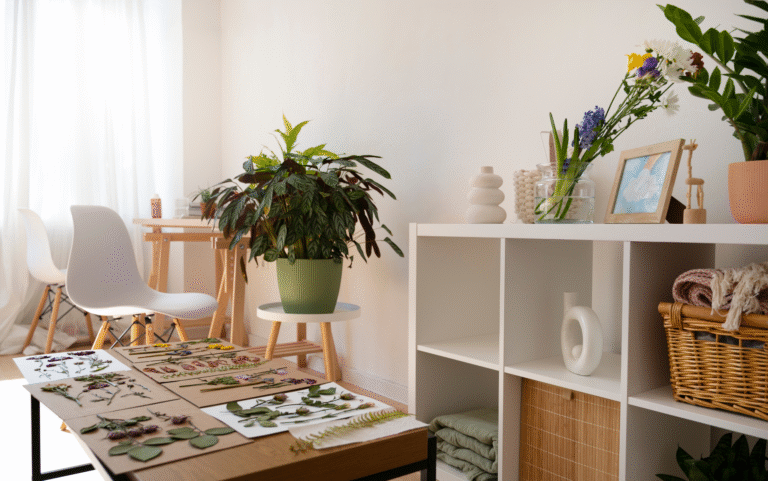
- Art stack: two or three frames in a clean column (top aligned with your eye level). Mix one textured piece — linen, pressed leaves, or a fabric swatch.
- Utility hook for a throw, headphones, or tote. Hooks shift weight off chairs, preserving that “ready for you” feeling.
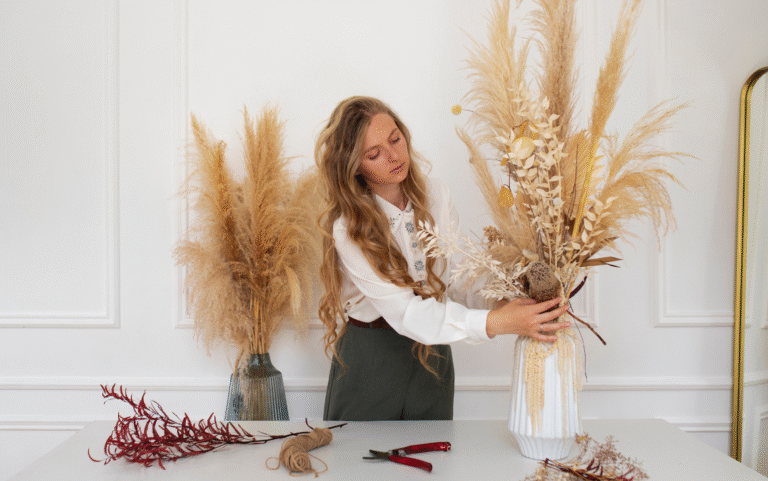
If your corner lacks wall space, use height in objects: a tall, narrow lamp; a plant that climbs; a vase with long stems. The eye moves up and down, not side to side, keeping the footprint calm. Small-space verticality is less about stacking more and more about drawing a gentle line the eye can follow.
Light & Scale
Cozy corners are made of edges of light. Instead of blasting the room, aim for a pool that lands softly on your book or cup and fades before it hits the ceiling. Choose a warm bulb (2700–3000K) and a shade that diffuses rather than exposes the bulb. If you only have overhead light, add a dimmer or use a low-watt smart bulb and place a reflective tray on the table to bounce a hint of glow.
Scale is the second half of the conversation. A side table between 35–45 cm in diameter is enough for a mug, a book, and a small vase. Keep seat height between 42–46 cm so your hips and knees are level. If the chair is deep, add a lumbar cushion to bring your back forward — you’ll stay longer if your spine is happy. When in doubt, edit height: raising a lamp by 3–4 cm or lowering artwork by the same amount can shift the whole mood.
Texture is where small spaces win big. In a full-size living room, you need many layers to feel warm; in a nook, a single knit throw or boucle cushion reads instantly. Combine one tactile piece with one smooth surface (glass, glazed ceramic) to keep the palette balanced. If you love color, try a quiet triad: your wall color or soft neutral as base, a deeper accent (like coffee brown or forest), and one dusted pastel — sage, clay, or oat — for lift. Corners love colors that feel like they already live there.
Quick Tables
Budget-friendly swaps make corners accessible. A wooden stool becomes a side table with a tray on top. A clamp lamp frees floor space and looks studio-clean. If you rent and can’t drill, use leaning art, tall plants, and furniture placement to “draw” the boundary. The goal isn’t perfection — it’s a ritual that greets you without effort.
For tiny homes, consider multiplier pieces: a lidded ottoman (storage + footrest + extra seat), a folding screen (privacy + backdrop), or a wall-hung magazine rack that doubles as a mail sorter. Keep cords disciplined with stick-on clips along baseboards. When the practical layer is calm, your eye notices texture and light — the parts that actually feel like home.
Do-Today Steps
Transformation loves momentum. Choose one corner — even half a meter of wall is plenty — and try this quick recipe:
- Place a chair 8–12 cm off the wall. Test leg room with a slow sit and stand.
- Add a small table (or stool + tray). Check the reach with a mug and notebook.
- Light the surface with a warm bulb. Dim it until edges go soft.
- Style a three-piece vignette: soft, functional, personal. Snap a photo. Remove anything extra.
- Ritualize it tomorrow for five minutes. Corners become habits before they become décor.
When you’re ready to personalize further, browse textiles, candles, and small decor that echo your palette. Pick pieces that feel good in the hand — your body will remember the texture before your mind registers the look.