Start with Intention
Picture the moment your day finally slows: the door clicks, the kettle hums, and your living room opens its arms like an old friend. Calm isn’t about doing less — it’s about choosing with care. A peaceful room aligns what you need with what you feel: the softness under your feet, the way light rests on a wall, the quiet rhythm of objects that belong exactly where they are.
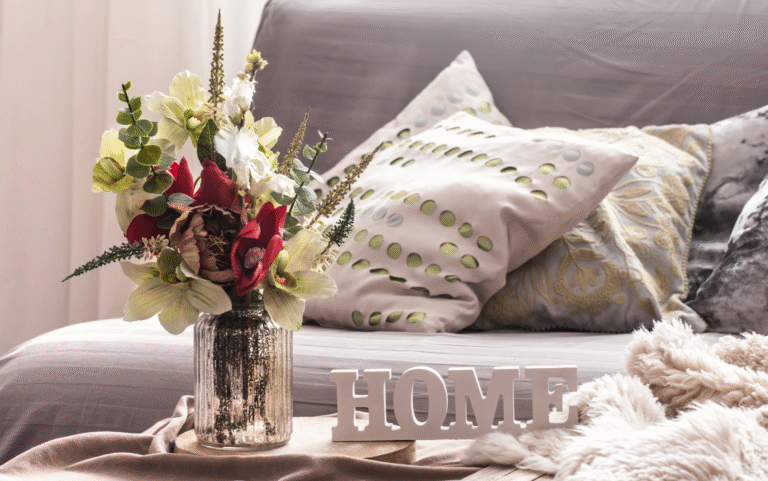
Begin by naming the room’s purpose: restore, connect, or inspire. If restoration leads, reduce visual noise. Keep the palette warm and grounded; Homelune’s cozy neutrals pair beautifully with daylight and evening lamps. Two well-sized pillows can feel calmer than six. A side table within reach beats a beautiful, impractical centerpiece. Intentional rooms don’t shout — they offer a soft reply.
“Calm is a design decision: fewer distractions, wiser textures, kinder light.”
Light that Settles (Not Startles)
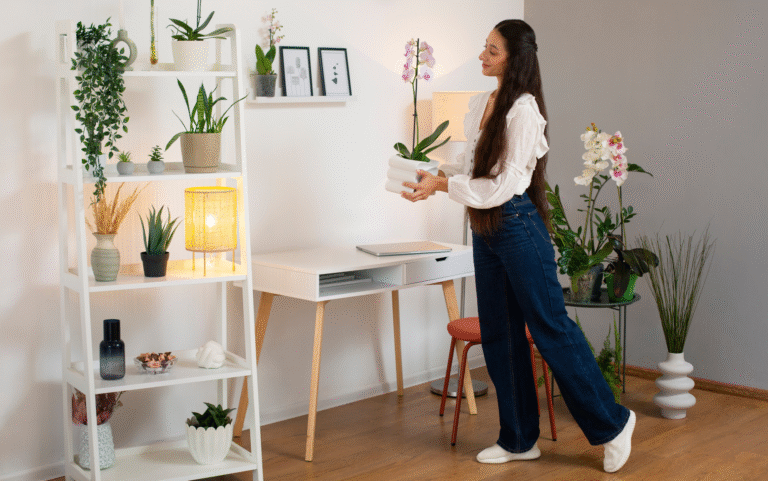
Light shapes mood. In the morning, let windows breathe — simple treatments invite daylight while controlling glare. As evening falls, layer: an ambient glow, a task lamp by the chair, and a gentle accent that grazes art or a plant shelf. Avoid harsh, cold bulbs that flatten the scene; warm temperatures keep skin tones natural and fabrics inviting.
Think of light as choreography. When pathways, seating, and artwork are softly illuminated, your eye slows down and your body follows. If the room feels “busy,” it’s often a light problem pretending to be a décor problem.
A Breathable Layout
Calm is kinetic: if you’re sidestepping a coffee table or stretching for the remote, the layout is stealing energy. Leave clear walkways. Anchor the seating zone with a rug sized to gather everyone — front legs of sofas and chairs on the rug unify the space. Group seats for conversation, not only toward a screen, and let furniture pull away from walls: a few centimeters of air behind a sofa adds surprising serenity.
Surfaces deserve editing. One tray with a candle and a book says more than six small objects competing for attention. Store remotes in a lidded box, tuck throws into a basket, and decide where mail rests. Peace is predictable — put it on a map.
Texture & Tone: The Quiet Storytellers
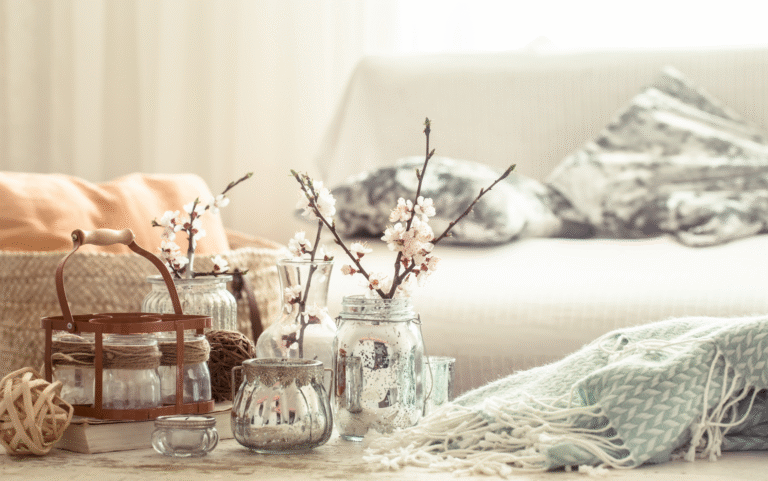
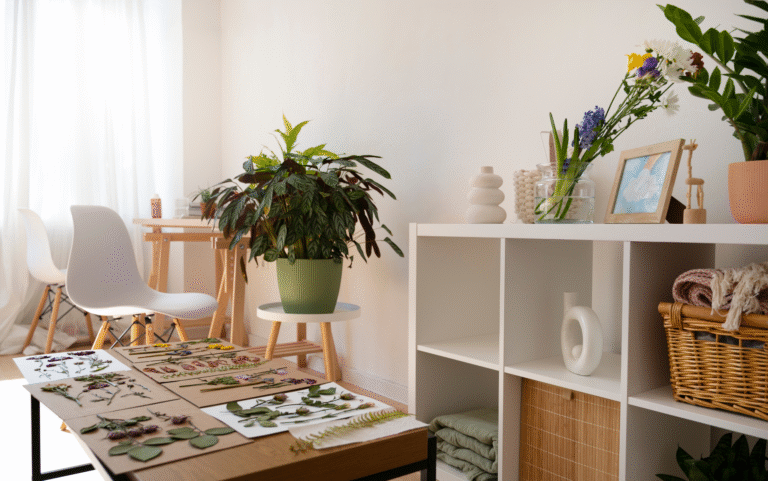
Calm isn’t blank; it’s layered. Pair smooth ceramics with woven baskets, crisp pillow covers with a knit throw, matte finishes with a gentle sheen. When textures complement, the eye stops scanning and starts resting. If a room feels cold, it’s not always color — it may be a texture gap. Add a denser rug, a softer throw, or a wood accent, and watch the atmosphere deepen.
Tone harmony matters. Choose a primary neutral and two supporting tones, then repeat them across the room: the rug speaks to the pillows, the art echoes the throw. Repetition is the quiet power behind visual calm.
Quick Tables: From “Visual Noise” to “Calm Alternative”
Room Checklist: A 20-Minute Calm Reset
- Edit one surface — keep a tray, one candle, one book.
- Warm the light — swap cold bulbs and lower the dimmer after dusk.
- Unify seating — pull the rug to gather front legs of chairs/sofa.
- Soft-sound trio — rug + curtains + pillows reduce echo.
- Make comfort reachable — side table, throw basket, remote box.
- Repeat tones — echo your primary neutral in pillows/art/throw.
Do-Today Steps (Small Moves, Big Calm)
Choose one corner to transform first. Place a compact chair, a lamp with a warm pool of light, and a tray holding a mug and a book. That micro-haven teaches the whole room what calm feels like. Tomorrow, repeat the lesson on the sofa; next week, refine the rug and artwork. Calm grows by iteration, not overhaul.
When you’re ready to style further, explore pieces that last — neutral pillows with durable seams, throws that keep shape, prints you’ll love next season too. Curate slowly and celebrate the space you already have. Your living room doesn’t need to be louder to feel alive; it needs to be kinder.