Buy Less, Choose Better, Keep Longer
Sustainability starts before the cart. Ask simple questions: Does this piece solve a real problem in this home? Can it live in more than one room? Will the owner still love it next season? When the answer is yes, you’ve already cut waste — fewer returns, fewer forgotten items in the cupboard, fewer impulse regrets.
Cozy doesn’t require constant novelty. Quiet neutrals anchor a room, then small accents provide seasonality without replacing everything. When textiles and prints are designed to outlast trends, the space gains a calm confidence; it looks put-together on regular days, not just after a refresh.
Choose integrity you can see and feel: zippered covers you can wash, dense weaves that resist pilling, hems that lie flat, frames that don’t squeak. If a piece demands high maintenance just to survive, it will drift to a closet. Sustainable style favors items you’ll reach for without hesitation.
Materials That Make Sense
Materials carry values. They decide how a room feels under the hand and how long that feeling lasts. Aim for “low-drama care, high-mileage comfort.”
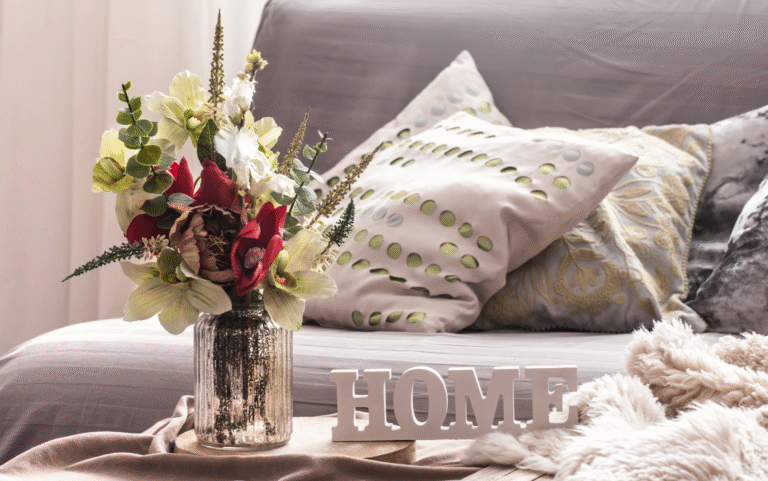
- Durable textiles: tight weaves, reinforced seams, stable color. A sofa pillow cover that survives weekly use prevents replacements.
- Prints that last: soft, lightfast finishes and thoughtful contrast so designs read well in real living light.
- Multi-room flexibility: pieces that move from living to bedroom without clashing — a true sustainability booster.
Texture also matters ethically. A slightly nubby cotton or linen blend hides everyday scuffs longer than glass-smooth surfaces, which means less aggressive cleaning and fewer replacements. Look for materials that age gently and develop character rather than panic at the first coffee ring.
Create a Capsule Décor
Think of décor like a wardrobe: a few core pieces that mix and travel. Start with a neutral throw, two sets of pillow covers that share a palette, a classic poster size that fits ready-made frames, a tray, and a candleholder. Rotate by season instead of buying new. The room stays fresh, your storage stays sane, and your budget breathes.
Capsules reduce decision fatigue. When everything is compatible, styling becomes moving — not shopping. That’s sustainable in money, energy, and time.
Cheatsheets
Care & Longevity
Gentle cycle, low heat, mild detergents — the quiet rules that keep fibers alive. Air rugs outdoors when the weather is kind; sunlight freshens and loosens dust that vacuums miss. Spot clean early rather than perfectly, because stains set with heat and panic. Give pieces a simple ritual and they give years back.
Storage matters too. Keep spare covers folded in a breathable bag, not plastic; tuck candles away from radiators; slip small art prints into a cardboard sleeve to avoid scuffs. Sustainable homes aren’t fussy — they’re prepared.
Common Mistakes (and Kinder Alternatives)
Buying for a future room: aspirational dimensions rarely match realities. Choose flexible sizes and standard formats so items migrate as life changes.
Confusing eco with fragile: delicate fabrics can be lovely, but if you worry every time someone sits, the piece won’t last. Pick durable weaves for heavy-use zones and save the silk moment for a cushion on a quiet chair.
Over-styling: sustainability shrinks when surfaces demand constant rearranging. Leave honest breathing room; the eye needs rest and hands need space.
Do-Today Steps
- Choose one item to keep for years and style it three ways this week.
- Create a tiny capsule: one throw, two covers, one print. Rotate instead of buying.
- Pick one care habit you’ll realistically do weekly — fluff, rotate, or quick dust.